Entry · Ref HT_BHFWH
Designing a Realistic Putting Green for Your Yard
- Posted
- 2026-11-08
- Last amended
- 2026-11-08
- Account
- @thebackyardputtinggreencentral
What Makes a Practice Green Feel like the Real Thing
For any golfer who wants to sharpen their short game at home, a backyard putting green can turn routine practice into something genuinely enjoyable. But building one that rolls true, holds up to weather, and looks natural takes more than laying down a strip of turf. The difference between a frustrating surface and a consistent one comes down to the choices you make before the first piece of grass goes down.
Artificial turf has advanced considerably in recent years. The best options now mimic the texture, roll speed, and even the subtle imperfections of a real green. But not every product performs the same way. Understanding how construction layers, infill materials, and drainage affect the final surface helps you avoid a setup that feels more like a carpet than a green.
Sub-Base Preparation Is the Foundation of Consistency
No surface rolls well if the ground underneath shifts or holds water. Proper sub-base preparation starts with excavation. You need to remove enough soil so that the finished height of the green sits at or slightly above the surrounding grade. This prevents water from pooling along the edges. After excavation, a layer of crushed stone or decomposed granite gets compacted to create a stable, porous base. The goal is a surface that drains quickly and stays firm underfoot.
Compaction matters more than most people realize. If the base settles unevenly after a few months, the green develops low spots that collect water and cause the ball to bounce or change direction. A plate compactor or roller ensures uniform density. Some installers also add a layer of finer material, such as stone dust, to create a smooth finish before the turf goes down. This extra step helps eliminate small bumps that would otherwise show through the grass.
Drainage is another critical piece. Even with a well-compacted base, water needs a path to escape. Many artificial turf systems include perforated backing and a base layer designed to channel moisture away. In regions with heavy rain, adding a perimeter drain or a French drain around the green prevents the base from becoming saturated. A wet base leads to a spongy feel and can shorten the lifespan of the turf.
Choosing the Right Turf for Putting
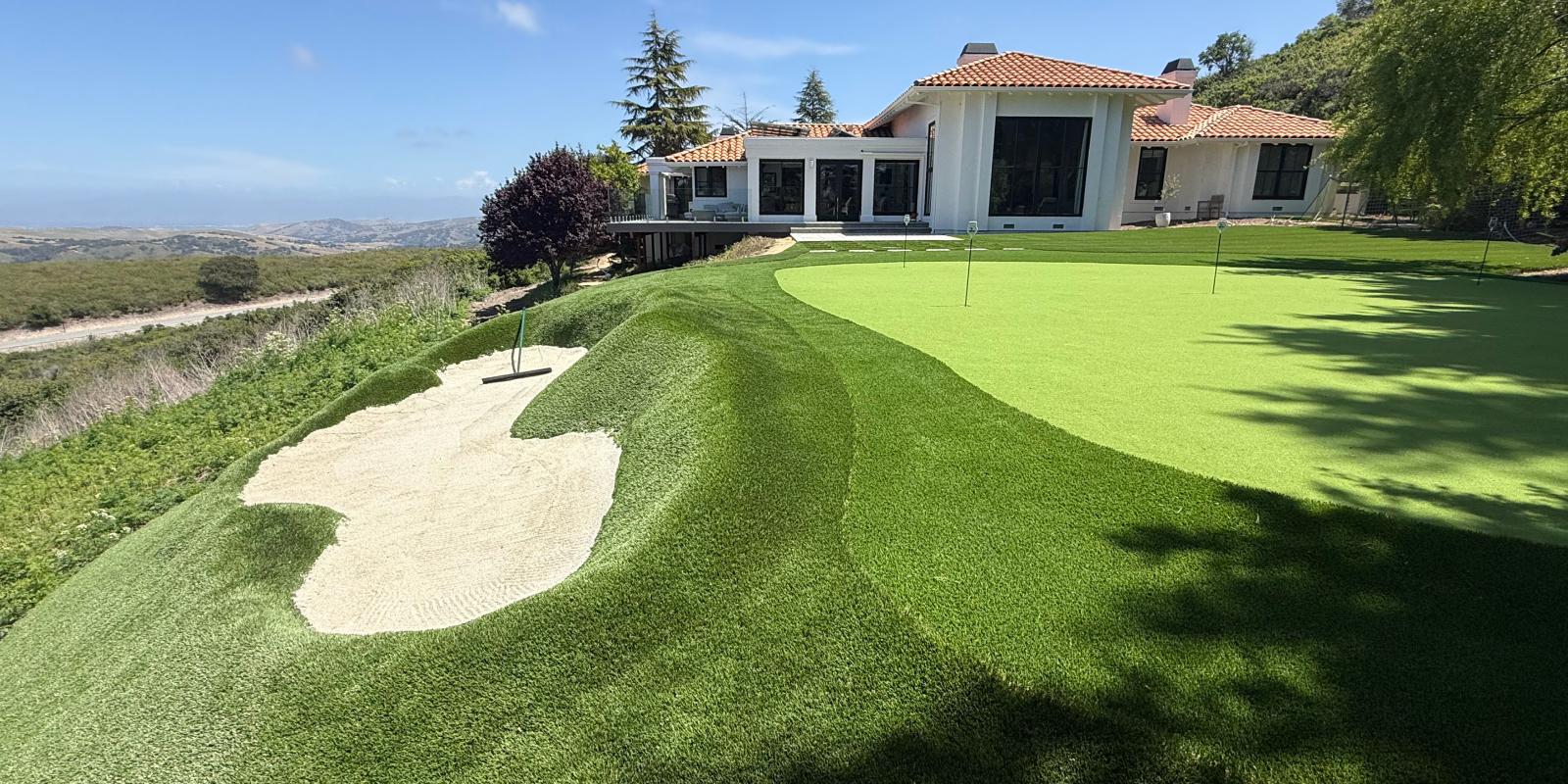
Not all artificial grass works well for a putting surface. Turf designed for lawns typically has a longer pile height and softer fibers, which makes the ball drag or wobble. For a green, look for turf with a pile height between half an inch and three-quarters of an inch. Shorter fibers allow the ball to roll more freely and maintain a consistent speed.
Nylon turf is a common choice for putting greens because it holds its shape well and resists flattening over time. Polyethylene is softer and quieter under foot but can lose its resilience faster under heavy use. Some products blend both materials to balance durability and feel. The density of the fibers also affects performance. A higher stitch rate means more fibers per square inch, which creates a tighter surface that supports the ball and reduces imperfections in the roll.
Infill and Its Role in Roll Speed
Infill material does more than weigh down the turf. It supports the fibers, adds cushioning, and helps regulate how fast the ball travels. Silica sand is the most common infill for putting greens. After the turf is laid, sand gets brushed into the fibers until it reaches a depth just below the tips. The amount of sand and how evenly it is distributed directly affects the stimpmeter reading of the green.
Less infill produces a faster roll but can leave the fibers less supported, leading to wrinkles or shifting over time. More infill slows the surface down and gives a firmer feel. Finding the right balance depends on your preference and the type of turf you chose. Some installers use a top dressing of fine crumb rubber mixed with sand to add a little spring and reduce glare. Testing the roll with a few putts during installation helps fine-tune the speed before the infill settles completely.
One of the most satisfying aspects of building a backyard putting green is that you can adjust the speed later. Adding a small amount of sand speeds up the surface, while brushing more sand into the fibers slows it down. This flexibility lets you change the difficulty level as your skills improve or as the seasons change.
Shaping and Contours Add Challenge
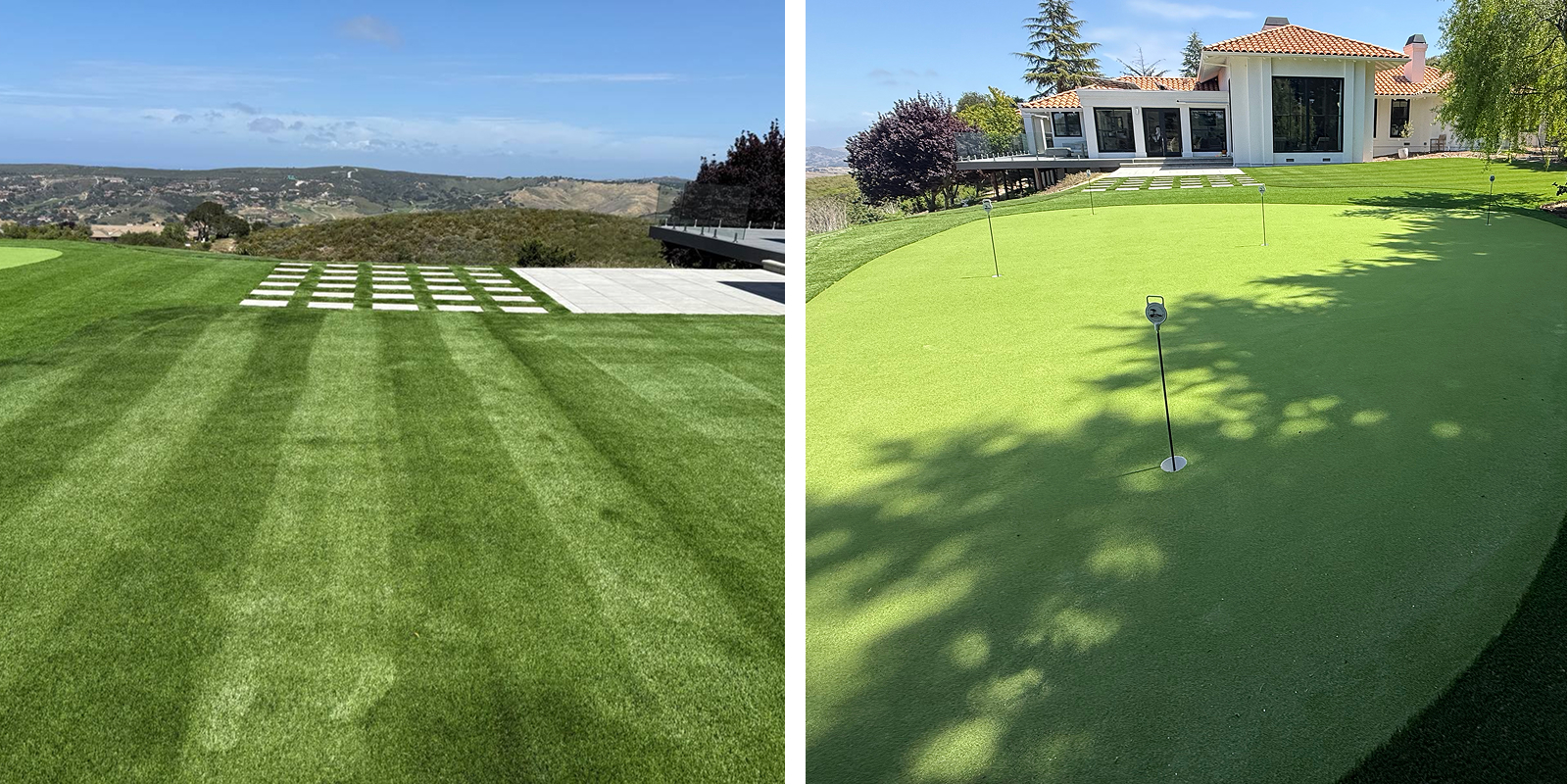
A flat green gets boring fast. Adding gentle slopes and breaks makes practice more engaging and mirrors what you face on a real course. The contours are built into the sub-base before the turf goes down. Mounding soil or crushed stone in low, sweeping curves creates the kind of subtle undulations that force you to read the line and control your speed.
Keep in mind that sharp breaks require more careful grading. If the slope is too steep, the ball may roll off line or the turf may not lay flat against the base. A slope of one to two percent is enough to create a readable break without causing problems. Working with a laser level or a string line helps maintain consistent grades across the green.
Fringe grass around the putting surface adds realism and gives you a visual target for approach shots. Fringe turf usually has a slightly longer pile height and a different color to distinguish it from the putting surface. It also helps anchor the edges of the green and hides the transition between the turf and the surrounding landscape.
Putting Cup Placement and Maintenance
A proper putting cup set into the turf allows you to practice holing out just like on a real green. The cup should sit flush with the surface so the ball drops cleanly. Most artificial turf systems use a cup with a removable collar that lets you change the hole location. Moving the hole every few weeks prevents wear patterns from forming around one spot and keeps practice fresh.
Maintenance on an artificial green is minimal compared to natural grass, but it is not zero. Leaves, dirt, and debris need to be removed regularly, especially after wind or rain. A leaf blower or a stiff broom works well for keeping the surface clean. Brushing the fibers occasionally with a power brush or a drag mat keeps them upright and prevents matting in high-traffic areas. Infill levels should be checked once or twice a year and topped off as needed to maintain consistent roll speed.
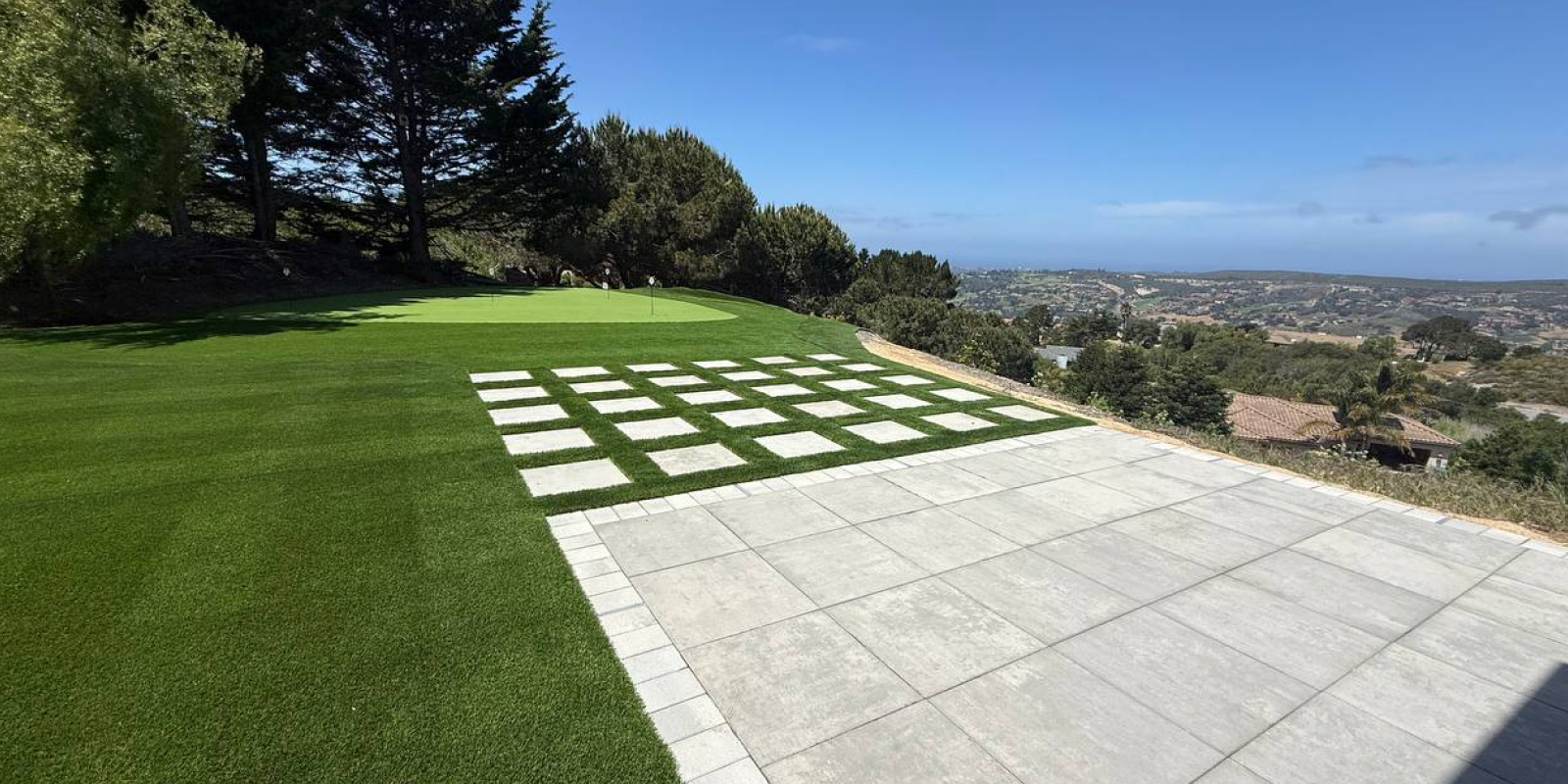
Weeds can sometimes find their way through the seams or along the edges. Applying a weed barrier fabric during installation helps, but spot-treating with a non-toxic herbicide keeps the green looking neat without damaging the turf.
When all the components come together correctly, a backyard putting green becomes a place where you can work on your stroke every day without leaving home. The convenience alone makes practice more frequent, and frequent practice is what builds confidence on the course. Whether you are a weekend golfer or a serious competitor, the time spent on a well-built green pays off in lower scores and more enjoyment every time you play.